
Table of Contents
Introduction
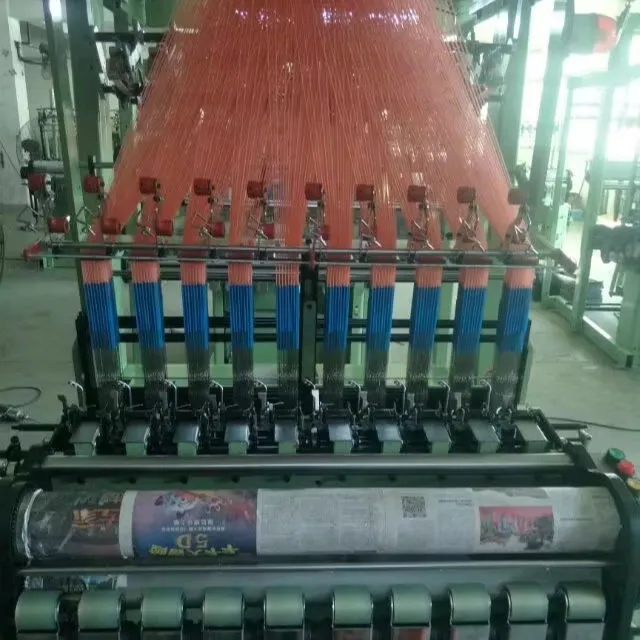
You did your research. You found a great elastic manufacturer in Surat, liked their product samples, agreed on the price — and then the freight bill arrived. And it was much higher than you expected.
This is one of the most common frustrations for B2B buyers and wholesalers who import elastic from India. The product cost looks attractive, but by the time the shipment lands in your warehouse, the total cost has climbed far beyond your original estimate. Freight charges, customs duties, packaging fees, and agent markups all quietly add up — and many buyers only notice this after the damage is already done.
The good news is that freight costs are not fixed. They are not something you simply have to accept. With the right planning, the right supplier relationship, and a few smart logistical decisions, you can significantly reduce what you pay to ship elastic from Surat to your country — sometimes by 30 to 40 percent. In this guide, you will learn 7 simple, practical ways to do exactly that, without compromising on product quality or delivery reliability.
Why Surat is a Trusted Source for Elastic
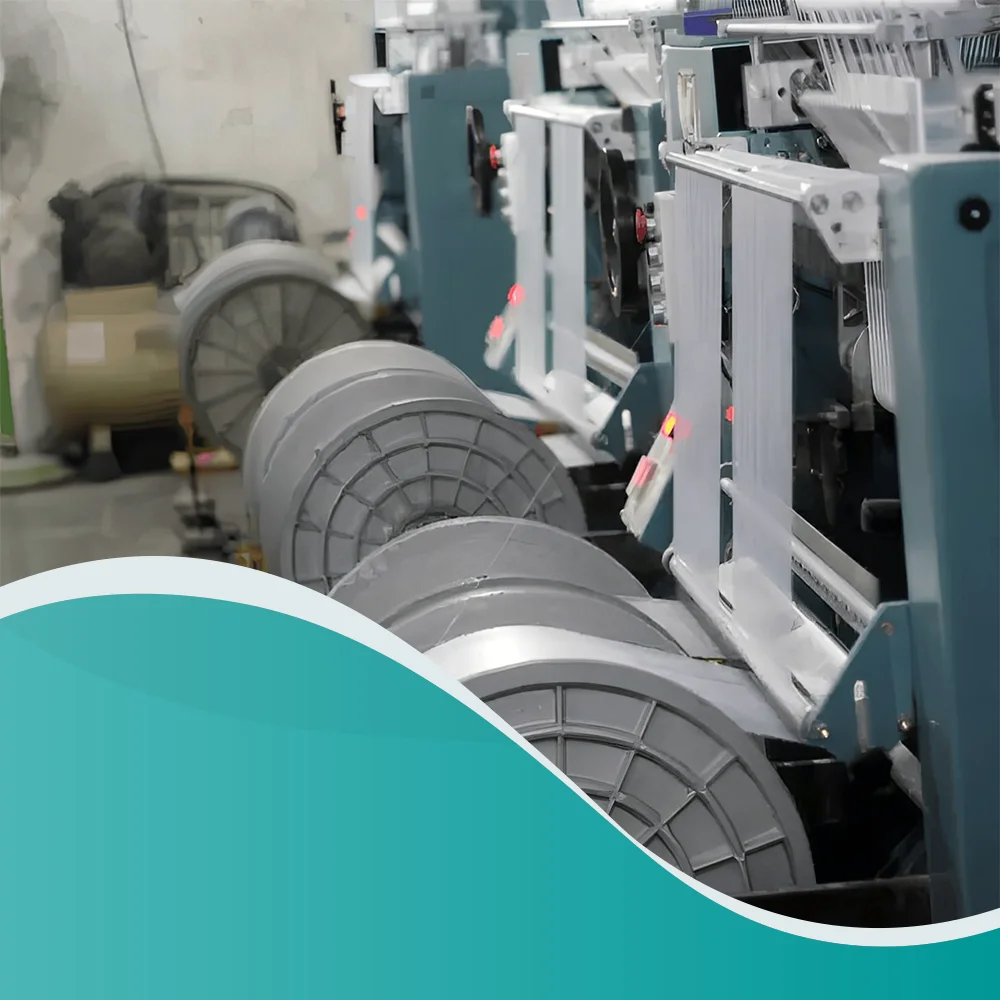
Before we discuss saving money on freight, it helps to understand why Surat has become such a preferred sourcing hub for elastic in the first place. Surat, located in Gujarat, India, is one of the country’s leading textile and fabric manufacturing cities. It has a long, well-established history of producing high-quality elastic bands in a wide range of types — woven, knitted, braided, and silicone — used across industries from garment manufacturing and fashion to medical wear, sportswear, and industrial packaging.
What makes Surat particularly attractive to international buyers is the combination of competitive pricing, manufacturing depth, and export experience. Factories here have worked with buyers from the USA, UK, UAE, Europe, and Southeast Asia for decades. They understand international quality standards, custom requirements, and the documentation needed for smooth exports. This is why, when buyers are looking to reduce their total sourcing cost, working with an elastic manufacturer in Surat is often the smartest starting point — not just for product value, but for freight efficiency as well.
What Drives Up Freight Costs?
To reduce freight costs, you first need to understand what is causing them to rise. Many buyers focus only on the product price and treat shipping as an afterthought. This is where things go wrong. Freight costs are shaped by several interconnected factors, and understanding each one puts you in a much better position to control them.
The shipping mode you choose — air or sea — is the single biggest cost variable. Air freight is fast but can cost five to ten times more than sea freight for the same shipment. Beyond that, carriers calculate charges using dimensional weight, which is based on the physical size of your package, not just its actual weight. Elastic rolls that are loosely packed in oversized boxes end up costing more to ship than they should.
On top of this, customs duties are calculated using an HS (Harmonized System) code — and using the wrong code can trigger delays, re-inspection, and unexpected charges at the border.
There are two more factors that are easy to overlook. Port charges at both the origin (Surat or JNPT) and your destination port add to your total cost. And if you are purchasing through an agent or trading company rather than directly from a manufacturer, you are almost certainly paying a markup on the freight as well. Knowing these five drivers — shipping mode, dimensional weight, HS codes, port charges, and middlemen — gives you a clear map of where to focus your efforts.
7 Practical Ways to Reduce Freight Costs
Tip 1: Order in Bulk to Lower Per-Unit Shipping Cost
One of the simplest and most effective ways to reduce your per-unit freight cost is to order more in a single shipment. When you break your purchases into many small, frequent orders, you end up paying full freight charges every single time. The carrier does not give you a discount for being a loyal customer — you pay the base rate each time regardless of volume. By consolidating your needs into one larger order, the shipping cost is spread across far more units, which makes each piece significantly cheaper to import.
For example, if you currently place four small orders a year, try consolidating into two larger orders. The freight cost per roll of elastic can drop by 20 to 30 percent with this one change alone. Speak to your elastic manufacturer in Surat about their bulk pricing tiers and MOQ (Minimum Order Quantity) options — most manufacturers are happy to work with buyers who commit to larger, planned orders.
Tip 2: Choose Sea Freight Over Air for Large Orders
Air freight is convenient and fast, but it is expensive — sometimes five to ten times the cost of sea freight for the same volume of goods. If your order is not urgently needed within a few days, switching to sea freight is one of the fastest and most impactful ways to reduce your total import cost. The trade-off is delivery time: sea freight from India typically takes 15 to 30 days depending on the destination, whereas air freight arrives in 2 to 5 days. For most wholesalers with planned inventory cycles, sea freight is clearly the better option.
| Factor | Air Freight | Sea Freight |
|---|---|---|
| Cost | High | Low |
| Speed | 2–5 days | 15–30 days |
| Best For | Small / urgent orders | Large bulk orders |
| Risk of Damage | Low | Low (with good packing) |
| Recommended For | Samples, reorders | First orders, stock-up |
As a practical rule, use sea freight for all large, planned stock orders and reserve air freight only for urgent restocks or when you need to send samples quickly. Building your buying calendar around sea freight timelines alone can save you thousands of dollars every year.
Tip 3: Work Directly with an Elastic Manufacturer in Surat
Many international buyers still source elastic through trading companies or agents. Agents can be helpful when you are just starting out and do not know the market. But once you have a clear idea of what you need, buying through a middleman adds cost at every stage — including freight. Agents mark up the product price, often add handling fees, and sometimes bundle in freight margins that you never see itemized. When you work directly with an elastic manufacturer in Surat, you gain access to factory prices, clearer communication, and much greater control over how your goods are packed and shipped.
Eliminating the middleman alone can reduce your total landed cost by 10 to 20 percent — a meaningful saving on any volume order.
Tip 4: Optimize Packaging to Reduce Dimensional Weight
Dimensional weight — sometimes called volumetric weight — is a pricing method used by most international carriers. Instead of charging purely by actual weight, they calculate a chargeable weight based on the physical size of the package. If your elastic rolls are loosely packed in large, airy boxes, you will be billed for the space the package takes up, not just what it weighs. This is a hidden cost many buyers do not realize they are paying.
The fix is straightforward: ask your Surat supplier to compress or tightly roll the elastic spools and use appropriately sized, well-fitted boxes. Some manufacturers will do this automatically for experienced export clients; others may need a clear instruction from you. This simple packaging adjustment can visibly reduce your freight bill, especially on large shipments where dimensional weight pricing kicks in at scale.
Tip 5: Use a Freight Forwarder Familiar with Indian Textile Exports
A freight forwarder is a logistics professional who arranges international shipping on your behalf. They handle carrier bookings, customs documentation, HS code classification, and often port-to-port coordination. Using a good freight forwarder is not an added expense — it is actually a cost-saving move. Without one, buyers often pay higher carrier rates, make costly documentation errors, and face delays at customs that result in storage charges and penalty fees.
The key is to choose a forwarder who specifically understands Indian textile and garment exports. They will know the right HS codes for elastic products, the correct port procedures at JNPT or Surat, and how to avoid the most common clearance mistakes. Ask for referrals from your elastic supplier — most established manufacturers in Surat work regularly with a few trusted freight partners and can recommend one based on your destination country.
Tip 6: Plan Orders in Advance to Avoid Express Shipping
Rush orders are expensive. When you run low on stock unexpectedly and urgently need elastic, you are forced to use air freight — and you pay a significant premium for that speed. This is one of the most avoidable costs in the entire supply chain, and it is almost entirely a result of poor inventory planning rather than any supplier or logistics issue.
The solution is to build a 60 to 90 day inventory planning cycle. Monitor your stock levels consistently, forecast your demand based on seasonal patterns and sales history, and place orders before you reach a critical low point. When you order in advance, you always have the option of choosing slower, cheaper sea freight. Over the course of a year, eliminating even two or three air freight rush shipments can result in substantial savings — sometimes enough to fund an entire additional order.
Tip 7: Consolidate Shipments Using LCL (Less than Container Load)
If your order volume is not large enough to fill an entire 20-foot or 40-foot shipping container, you do not need to pay for one. LCL (Less than Container Load) shipping is a service where your goods share container space with other exporters’ shipments. You only pay for the cubic meters your elastic order actually occupies, making it a highly cost-effective option for mid-size buyers who are not yet at full container volumes.
Many freight forwarders operating out of Surat and nearby ports offer LCL consolidation as a standard service. You can also make LCL even more efficient by combining your elastic order with other textile or garment products you source from the same region — filling more of the container share you are paying for. Over time, as your order volumes grow, you can transition to full container loads (FCL) for even better per-unit freight rates
Common Mistakes That Increase Your Freight Costs
Even experienced buyers make avoidable errors that quietly inflate their freight bills. Being aware of these mistakes is just as important as knowing the right strategies. Here are the four most common ones to watch out for:
- Using the wrong HS code — Misclassifying your elastic product can trigger customs re-inspection, delays, and higher duty rates. Always confirm the correct code with your freight forwarder before the shipment is booked.
- Not comparing freight quotes — Always collect at least three quotes from different forwarders or carriers before confirming a shipment. Rates can vary significantly for the same route and service level.
- Choosing the cheapest manufacturer over the best — A very low product price can be tempting, but poor quality leads to returns, rework, or re-shipments — all of which cost far more than the initial saving.
- Skipping cargo insurance — For large elastic orders, cargo insurance is not optional. A single damaged or lost container can wipe out months of profit.
What to Ask Your Elastic Manufacturer in Surat Before Placing an Order
Before you confirm any order, having the right conversation with your supplier can prevent a lot of expensive surprises down the line. Most freight-related problems can be avoided entirely if buyers ask the right questions early in the process. Here are the key things to clarify with your elastic manufacturer in Surat before you commit:
- Do you offer FOB, CIF, or DDP pricing? (FOB = you manage freight from port; CIF = includes cost, insurance & freight; DDP = supplier delivers to your door)
- What is your standard export packaging, and can you compress rolls to reduce dimensional weight?
- Do you have prior experience exporting to my country and are you familiar with the documentation required?
- Can you work with my preferred freight forwarder, or would you recommend one based on my destination?
- What is your production lead time, and how many days before goods are ready for port pickup?
These five questions take only a few minutes to ask but can save you significant time, money, and frustration. A manufacturer who answers these clearly and confidently is one who has genuine export experience — and that is exactly who you want as a long-term partner.
Conclusion
Freight costs do not have to eat into your profits. With the right planning — bulk ordering, sea freight, direct manufacturer relationships, and smart inventory cycles — you can reduce your import costs by 30 to 40 percent without changing a single thing about your product.
The real key is starting with the right supplier. When your elastic manufacturer understands exports, packs efficiently, and communicates clearly, everything else falls into place naturally.
Proshiv has been supplying premium elastic to wholesalers and garment brands worldwide for years. We understand your freight challenges and work with you to make every shipment cost-effective, reliable, and hassle-free.
Ready to reduce your import costs? Contact Proshiv today for a wholesale quote and let us handle the rest